The Digital Utility Transformation
AI, unified data, and cognitive agents reshape the utility—stability, profitability, and sustainability from grid to market.
Analysis
The Digital Utility Transformation
AI, unified data, and cognitive agents reshape the utility—stability, profitability, and sustainability from grid to market.
Reliability focus
Grid stability
Top priority
Data challenge
Siloed SCADA/asset/markets
Core blocker
Architecture shift
Unified Ontology
Digital twin of the utility
Challenge: Fragmented utility stack
Data from SCADA, asset management, and energy trading is trapped in silos. Predictive analytics and automation are impossible without a unified architecture connecting these domains.
Centralized, legacy grid management can’t handle the volatility of renewables and distributed energy resources (DERs), leading to instability and missed market opportunities.
- No shared model for assets, events, and market signals.
- Slow batch processes; operators lack real-time visibility.
- Compliance and audit strained by fragmented data.
Approach: Unified Ontology + cognitive agents
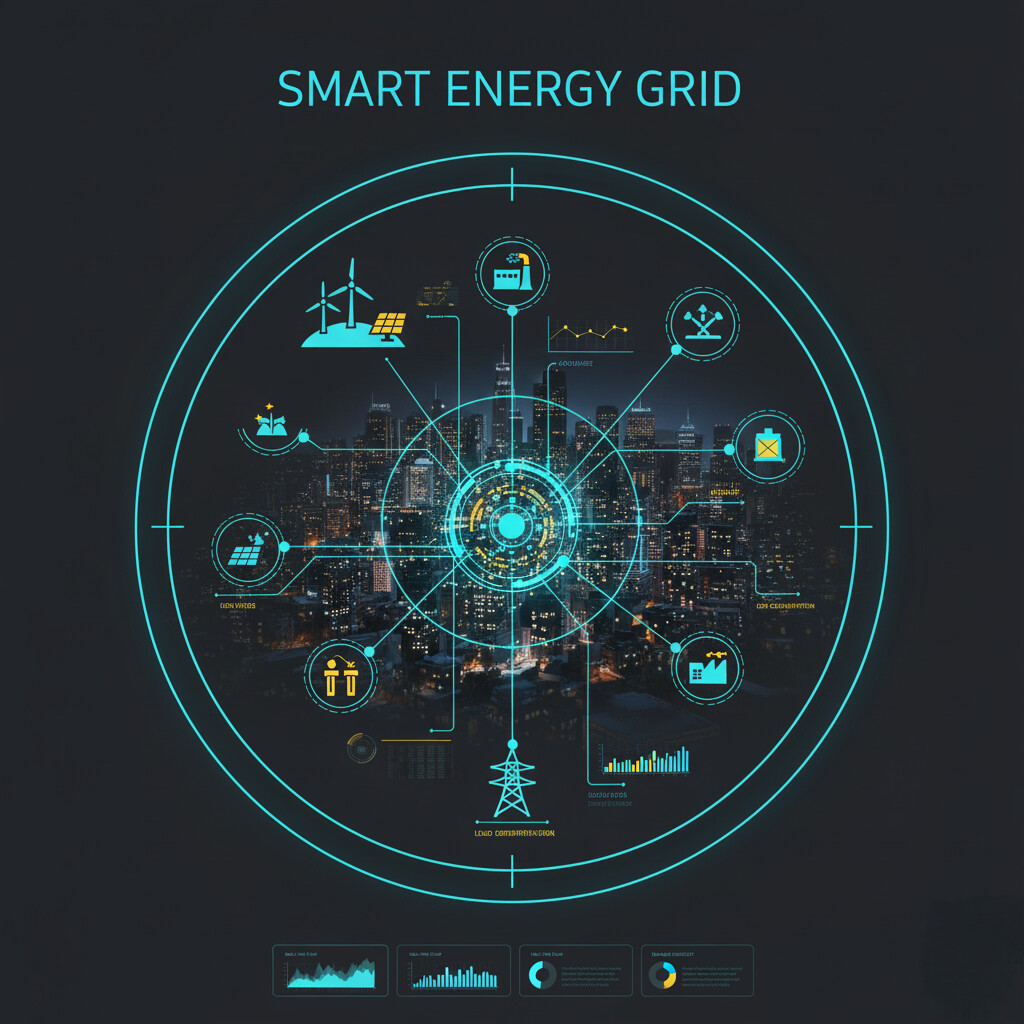
The “digital twin” of a utility is its Unified Ontology: a real-time semantic model that connects assets (transformers, turbines), market signals, and grid events.
On top, deploy cognitive agents: Grid Balancing (predict renewables, automate load), Predictive Maintenance (prevent outages), Algorithmic Trading (optimize positions). All governed via human-in-the-loop command centers.
- Event streams feed real-time state for grid and market decisions.
- Agents act with policy-as-code; humans supervise exceptions.
- Auditability: every action tied to data, model, and rule lineage.
What leaders should do next
- Map core decisions: Grid balancing, asset dispatch, trade execution—identify the highest-value, high-frequency calls.
- Define the ontology slice: Start with a substation or asset class; model entities and events needed for those decisions.
- Pilot an agent: Build one cognitive agent (e.g., grid balancing) to prove value and governance.
- Govern from day one: Command center with human oversight, policy-as-code, and auditability.