AI in Supply Chain: From Tools to Architecture
Why supply chain AI stalls at the pilot stage, and how a unified ontology, real-time visibility and governed agents move it into production.
Report
AI in Supply Chain: From Tools to Architecture
Why supply chain AI stalls at the pilot stage, and how a unified ontology, real-time visibility and governed agents move it into production.
Where AI stalls
At the pilot stage
Without shared data and governance
Root cause
Data fragmentation
ERP, WMS and TMS out of step
What works
Unified Ontology
One model of the network
Challenge: Fragmented data and uneven AI maturity
Many supply chain organizations run AI pilots; far fewer scale them into complex areas like multi-echelon inventory optimization. In our view the biggest barrier isn’t models—it’s data fragmentation across ERP, WMS, and TMS.
Data fragmentation is the blocker that matters most. Without a coherent data architecture, models fail to perform reliably, and initiatives stall at proof-of-concept.
- Context gaps: shipment, supplier, and inventory data live in separate silos.
- Latency: batch processes make real-time decisions impossible.
- Governance: no single truth for auditability or compliance.
Approach: Architect the Unified Supply Chain Ontology
We recommend shifting spend from isolated tools to foundational architecture: a unified data ontology and real-time, end-to-end visibility.
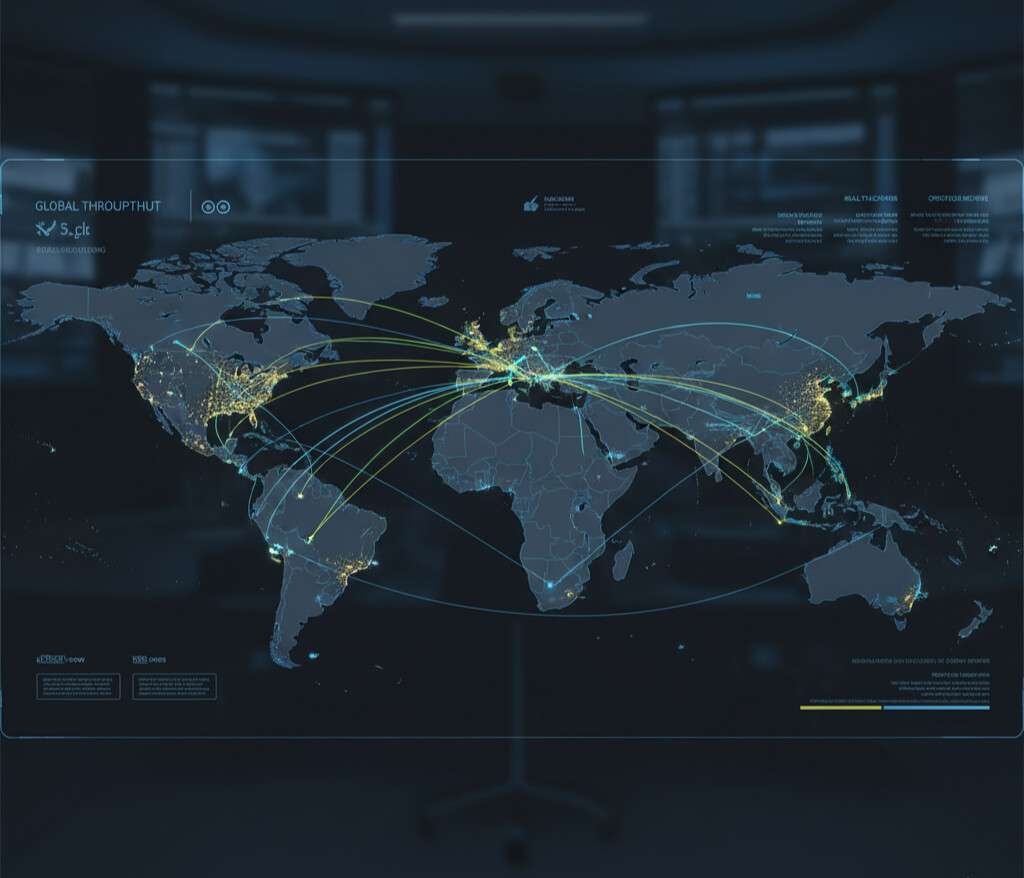
A Unified Ontology acts as the “digital twin” of the supply chain—shipments, inventory, suppliers, carriers, demand signals—creating a single source of truth for Cognitive Agents to reason, predict, and act.
- Normalize and relate core entities: orders, SKUs, locations, carriers, events.
- Ingest via streams for real-time state; enforce quality at the edge.
- Expose ontology via APIs so planning, execution, and analytics stay aligned.
What changes: faster value, governed at scale
- Demand forecasting and logistics optimization are usually the quickest places to start, because their data is closest to hand.
- A Unified Ontology is designed to make models more reliable and quicker to deploy than a tool-first approach.
- Governed, human-in-the-loop “Command Center” models build trust and ensure auditability.
- Exception automation: agents resolve late shipments and inventory imbalances autonomously, with human override.
- Network resilience: scenario simulations against disruptions become possible with unified context.
What leaders should do next
- Audit your data architecture: Map fragmentation across shipments, inventory, suppliers, orders, and events.
- Prioritize the Unified Ontology: Shift budget from point tools to building the foundational data layer.
- Start with high-value, governed use cases: Demand forecasting and network optimization as wedge use cases.
- Adopt human-in-the-loop: Deploy a command center so AI agents augment operators with clear governance.
- Measure outcomes: Track forecast accuracy, on-time performance, and buffer reductions to prove ROI.